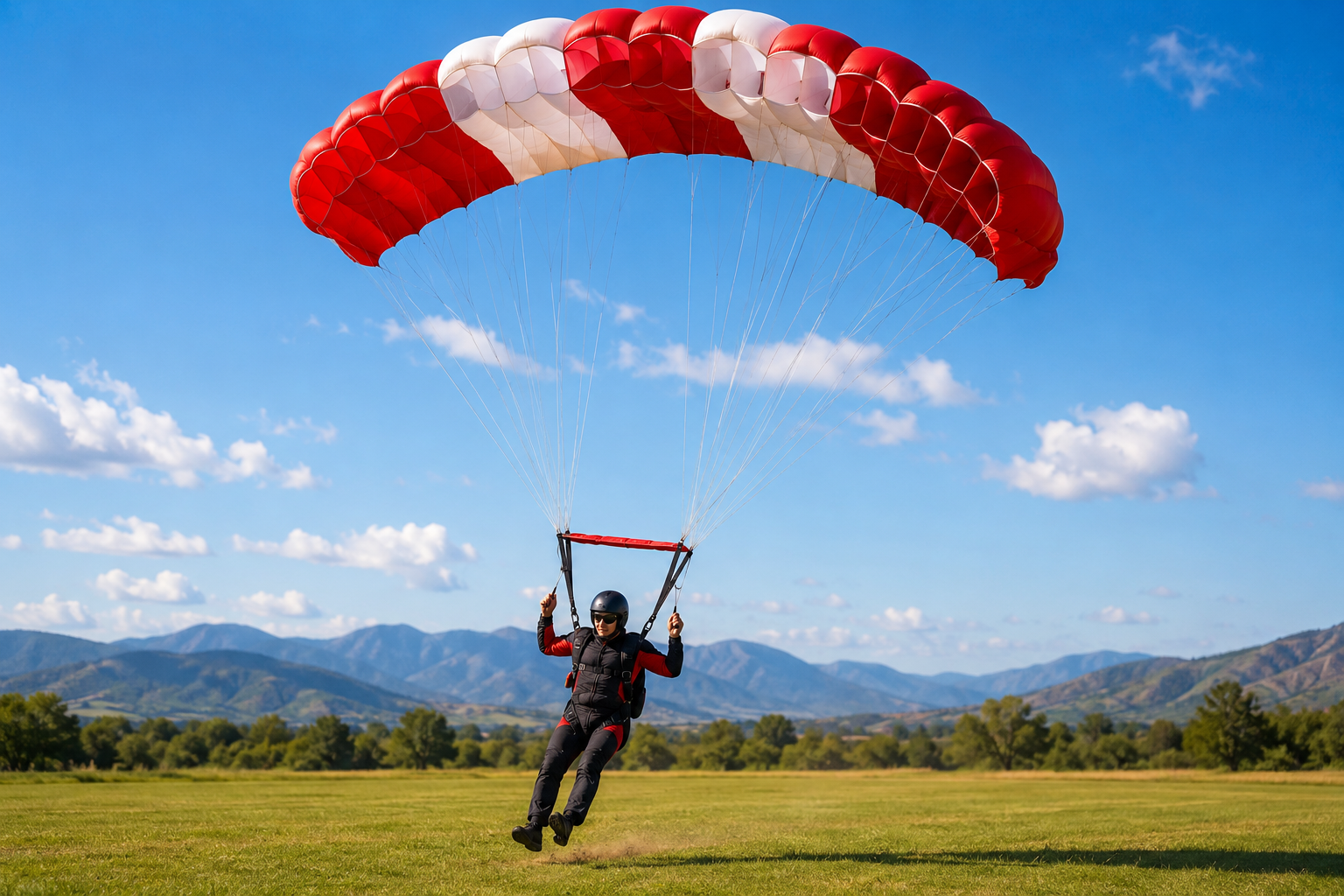
When a person jumps from a height, gravity pulls them toward the ground, causing them to accelerate and fall faster and faster. So how does a parachute make this fall safe?
In order to understand this question, lets looks at what happens when a person jumps with parachute.
The Role of Gravity
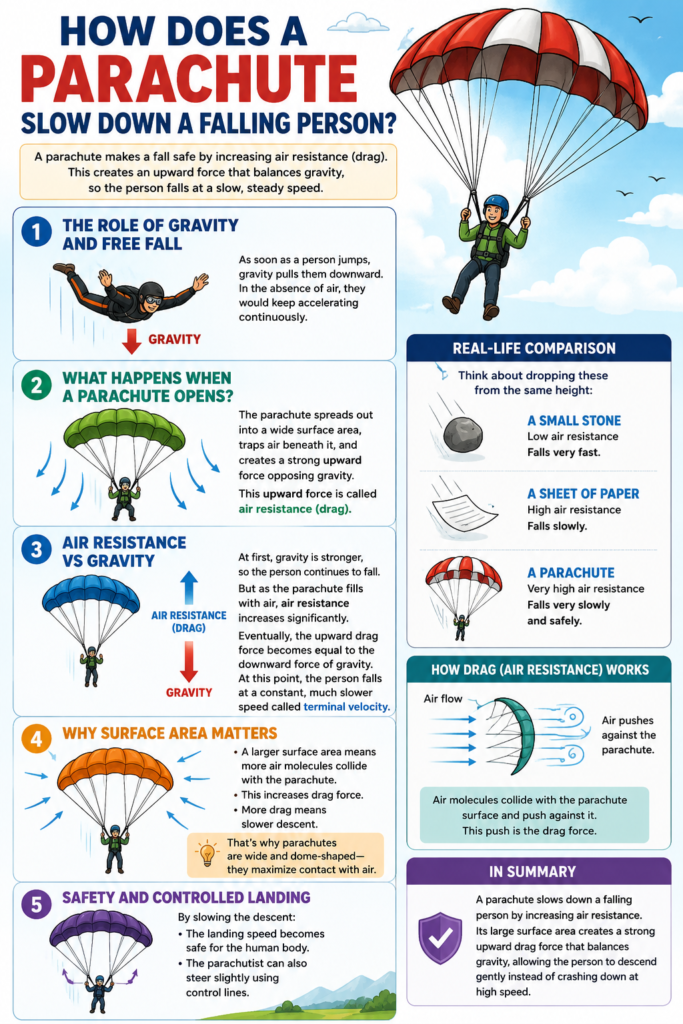
As soon as a person jumps, gravity pulls them downward. In the absence of air, they would keep accelerating continuously. However, because we live in an atmosphere, air plays a crucial role in slowing things down.
What Happens When a Parachute Opens?
A parachute is designed with a large, lightweight fabric canopy. When it opens, it spreads out into a wide surface area and traps air beneath it. The air beneath the fabric creates resist the downward motion of the parachute and hence exert a force in upward direction. This upward force is commonly known an drag.
Air Resistance vs Gravity
At first, gravity is stronger, so the person continues to fall. But as the parachute opens and fills with air, drag increases significantly. Eventually, the upward drag force becomes equal to the downward force of gravity. At this point, the person stops accelerating and falls at a constant, much slower speed. This steady speed is known as terminal velocity.
Why Surface Area Matters ?
The key to a parachute’s effectiveness is its large surface area. A larger surface area means more air molecules collide with the parachute. This increases drag force and more drag means slower descent.
That’s why parachutes are wide and dome-shaped—they maximize contact with air.
Conclusion
A parachute slows down a falling person by increasing air resistance. Its large surface area creates a strong upward drag force that balances gravity, allowing the person to descend gently instead of crashing down at high speed.