

Bio-energy is one of the most fascinating ways to produce energy using natural, renewable materials. In this article, we’ll learn how bio-energy works and how it generates small amounts of electricity using simple items like oranges.
Let’s first understand the term Bio-Energy.
What is Bio-Energy?
Bio-energy is energy derived from organic materials such as plants, fruits, and waste. These materials contain stored chemical energy. When this energy is released through chemical reactions, it can be converted into electrical energy. Bio-energy is therefore chemical energy.
In fruits like oranges, the juice contains acids (mainly citric acid), which play a key role in generating electricity.
Bio-Energy Experiment
Let’s do an experiment to learn how small amount of electricity is generated using Bio-Energy.
List of Items Required
In order for us to perform this experiment, we would be requiring following items:
| # | Description | Qty. |
| 1 | Oranges | 3 |
| 2 | Connecting Wires | 6 |
| 3 | Alligator Clips | 6 |
| 4 | Pair of Copper and Zinc Electrodes | 3 |
| 5 | LED Bulb | 1 |
Step-by-Step Instructions
- Roll each orange gently on a table. This helps release more juice inside thereby improving conductivity.
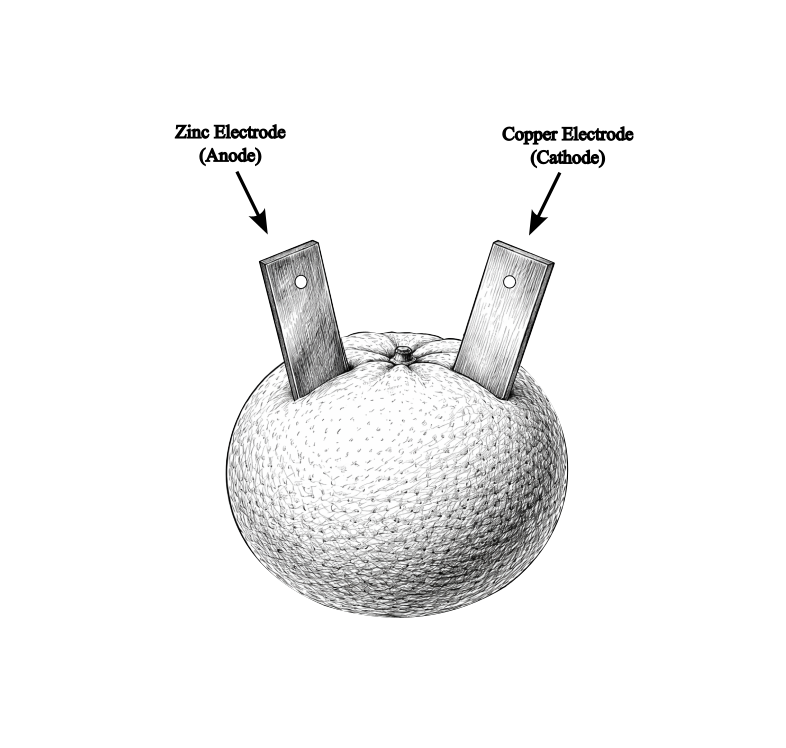
- Insert one copper electrodeandone zinc electrode into each orange. Make sure the electrodes don’t touch each other and are firmly placed inside the fruit.
3. Connect the zinc electrode of the first orange to the copper electrode of the second orange.
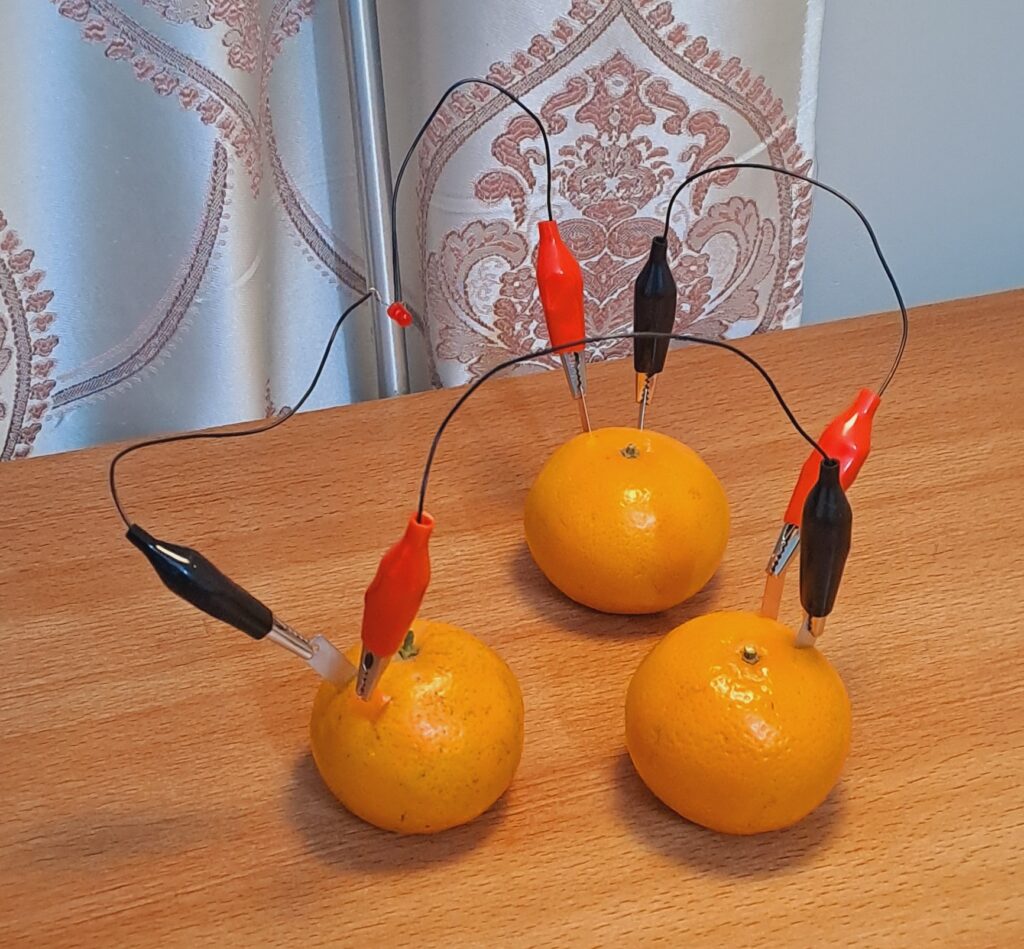
4. Connect all three oranges in series (for more details on Series Circuit, please refer to Understanding the basics of Electrical Circuit ) using alligator clips and wires.
5. Connect the free ends to a small Light Emitting Diode (LED) bulb. As soon as the free ends are connected with the LED bulb, it will light up. The complete arrangement is shown in the figure below:
How Bio-Energy from Oranges Generate Electricity?
The underlying principal in generating electricity through oranges is that same as that of DC battery producing electricity. Infact, each orange act as small power source. When the oranges are connected in series, their voltages add which are just enough to produce small electric current to light up small LED bulb.
The zinc electrode act as an anode, which is a positively charged electrode. The copper electrode act as a cathode which is a negatively charged electrode and attract positively charged ions. The orange juice acts as an electrolyte because its allows flow of ions which in turn cause the flow of electric current through the whole circuit.
When you connect multiple oranges in series, the zinc (anode) of the first orange releases electrons. These electrons flow through the wire to the copper (cathode) of the next orange. This pattern continues across all three oranges. This is how bio-energy present is oranges gets converted into electricity and light up the small LED bub.
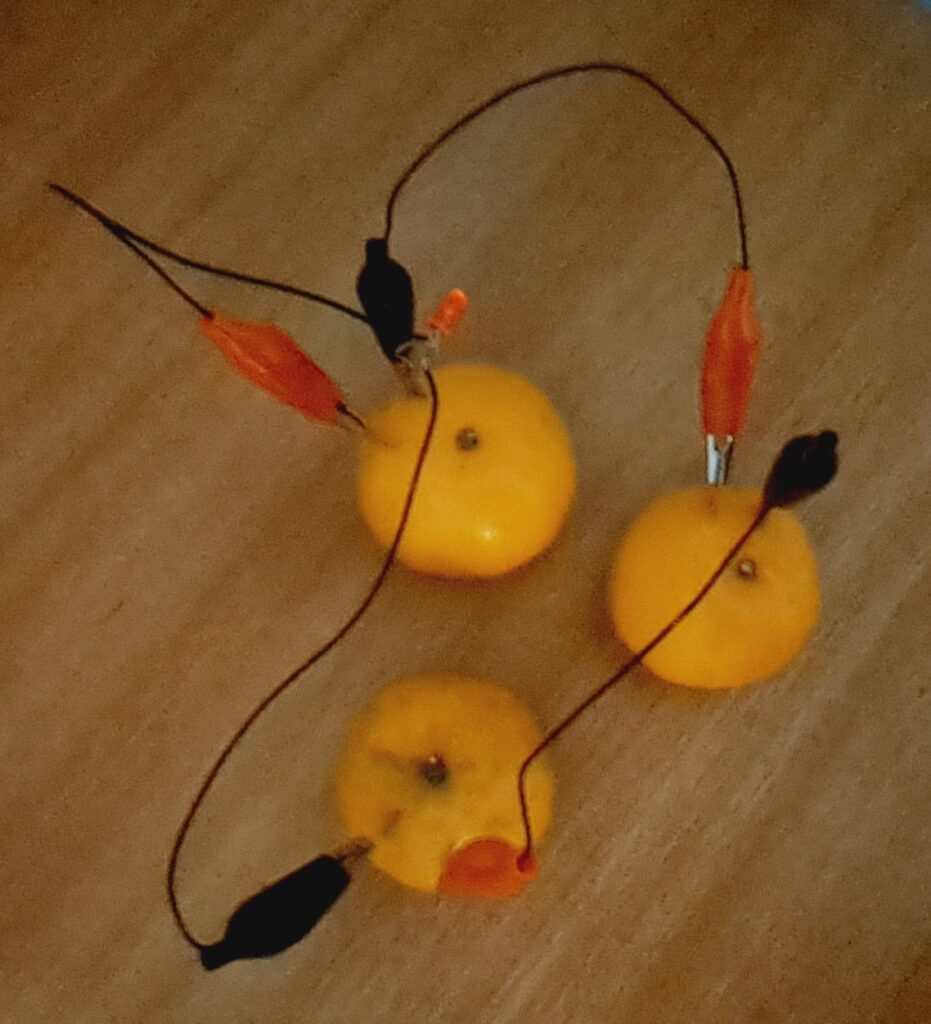
This simple orange battery experiment beautifully demonstrates how bio-energy works. By using natural materials and basic components, you can generate electricity and understand the science behind renewable energy.
It’s a perfect hands-on activity for students, hobbyists, and anyone interested in clean energy solutions.


wish you all the best