When we talk about sound — loud music, traffic noise, a phone buzzing — we usually describe it as loud or soft. But scientists and engineers measure sound using a special unit: the decibel (dB).
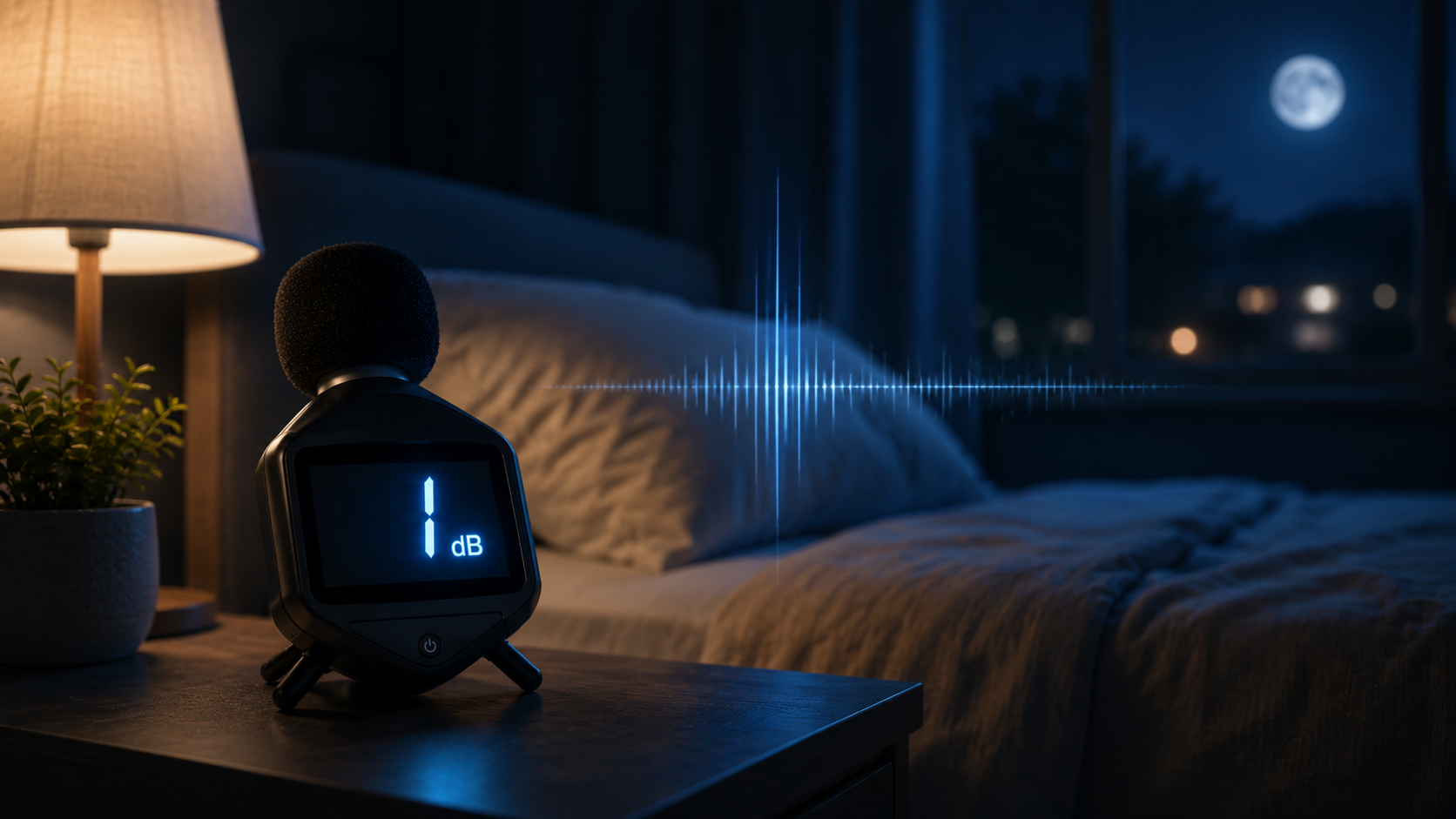
One of the most confusing things for beginners is this: “How much sound is equal to 1 dB?”
At first, 1 dB seems tiny and it is. But to really understand it, we need to unpack how the decibel scale works.
Why Sound Is Measured in Decibels?
As we know, distance is measured in meters, mass in grams, and force in newton-meters. A common feature of these units is that they follow a linear scale, meaning that each increase of one unit results in an equal increase in the quantity. If the scale for measuring the intensity of sound were linear, sound measurement numbers would reach into millions. As the intensity of sound represents the energy of the wave, so the sound intensity of some familiar sound will look something like this:
| Description | Sound Intensity |
| Whisper | 0.000001 |
| Conversation | 1 |
| Traffic | 1000 |
| Jet Engine | 1,000,000 |
As you can see from above table, if we simply measure sound intensity using the unit of energy, the one has to be deal with wide range of values ranging from very small to very big.
Hence in order to measure sound we use a logrithmic scale not a simple linear one.
What is a Logarithmic Scale?
A logarithmic scale doesn’t increase in equal steps like. Instead it increases by multiplying. This is due to the fact that the human ear can detect sounds from extremely faint to extremely loud, spanning a huge range of energy as we have seen above.
In order to measure sound we use common logarithm. A common logarithm is a kind of logarithm with base 10, often written as log₁₀(x) or simply log(x), tells you the power to which 10 must be raised to get a given number. For example, log₁₀(100) = 2 because 10² = 100, and log₁₀(1000) = 3 because 10³ = 1000. It is widely used in science and engineering because it conveniently represents very large or very small numbers on a compact scale.
So the common logarithim looks as follows:
1 → 10 → 100 → 1000 → 10,000
As you can see, it does not increase in equal steps; instead, it grows by a factor of 10 each time.
For a deeper understanding of the logarithmic scale, check out this interactive tool: Interactive Math Functions Tool (Learn Linear ,Exponential, Logarithmic and Quadratic Equations)
What Does 1 decibel (dB) of Sound Actually Represent?
It is important to note that logarithms have no units as they are typically created by taking the ratio of two identical units. However engineers and scientis use decibel (dB) to expresses the ratio of two values especially when ratio represents the power or intensity with respect to some reference value.
The formula for decibel is as follows:
dB = 10 × log₁₀ (I / I₀)
where
I = sound intensity
I₀ = sound intensity of the quietest sound humans can hear – taken as refernce value
You might have inferred from the above equation the logarithmic scale for measuring sound is actaully designed to match how our ears actually hear.
So 1 dB represents the smallest change in sound intensity that a human ear can detect.
Example: Converting Sound Intensity into Decibels (dB)
To understand how the decibel scale works, let’s calculate the sound level of a small fan. Suppose a fan produces a sound intensity of:
We want to convert this into decibels (dB).
The sound level in decibels is calculated using:
Where:
I = measured sound intensity
I0 = reference intensity
The standard reference intensity for sound is:
This is approximately the quietest sound a human ear can hear.
Our fan’s intensity is:
Substitute into the formula:
Solving the above equation gives us the value of 50 dB. This is the value of sound of fan in dB.
Safe Sound Levels: Why Protecting Your Hearing Matters
Sound is a normal part of everyday life, but very loud sounds can damage our hearing over time. The louder a sound is — and the longer we are exposed to it — the greater the risk of hearing problems. This is why scientists and health experts recommend staying within safe sound exposure levels.
While different regulatories organizations sets different limits for sound levels depending upon both in terms of loudness and exposure time but in general:
- Sounds below 70 dB are considered safe for long-term listening.
- Sounds above 85 dB can become harmful if heard for many hours.
- Extremely loud sounds above 120 dB may damage hearing almost immediately.
Hearing damage can affect school performance, work, sleep, and overall quality of life. Good hearing helps us communicate, learn, enjoy music, and stay aware of our surroundings.
Final Takeaway
A logarithmic scale for sound:
- A logarithmic scale helps simplify sound measurement by matching the wide range of human hearing levels into manageable units.
- A decibel (dB) unit of sound makes it easier to compare sounds meaningfully
- A decibel (dB) unit of sound also eliminates the needs for dealing with wide range of values.
- By understanding decibels and practicing safe listening habits, we can protect our ears for life.