Imagine holding a glass bulb and watching blue liquid climb a winding tube—using only the warmth of your hand. It may look like a tiny magic trick, but a hand boiler is a science demonstration of heat, evaporation, and pressure.
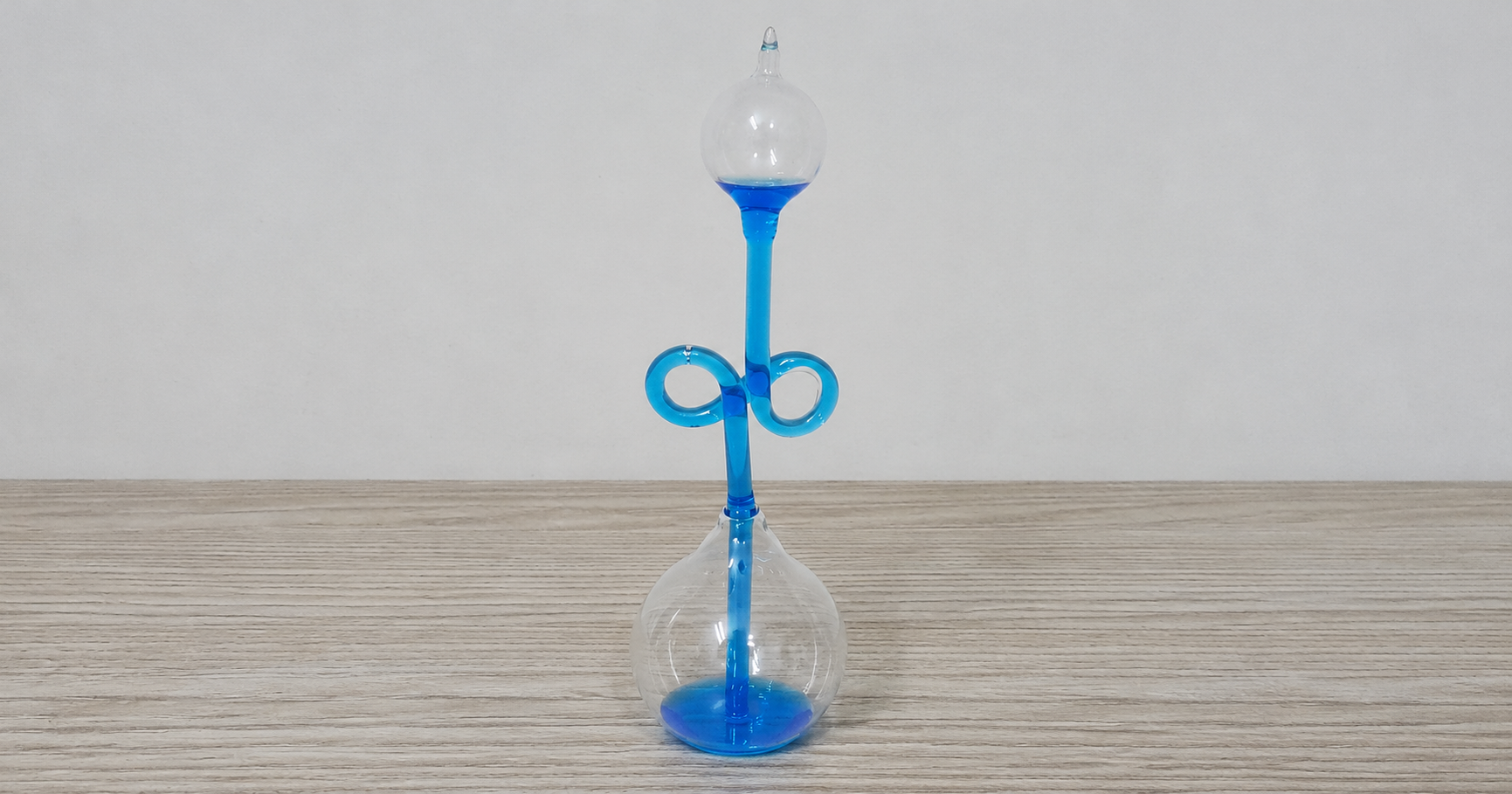
The hand boiler, also known as the pulse glass, pictured here has a large lower bulb containing blue liquid, a narrow glass tube with decorative loops, and an upper bulb. Its shape makes the liquid’s journey easy to watch.
What Is a Hand Boiler?
A hand boiler is a sealed glass device containing a small amount of liquid and its vapor. Vapor is the gaseous form of a substance that can also exist as a liquid.
These devices typically contain a volatile liquid, meaning one that evaporates readily. The space above the liquid is important. It allows vapor to exert pressure on the liquid’s surface.
How Does a Hand Boiler Work?
Step-1 Your hand warms the lower bulb
When your hand is warmer than the glass, heat flows from your skin through the glass into the lower bulb. You do not need to squeeze it: gentle contact supplies the warmth.
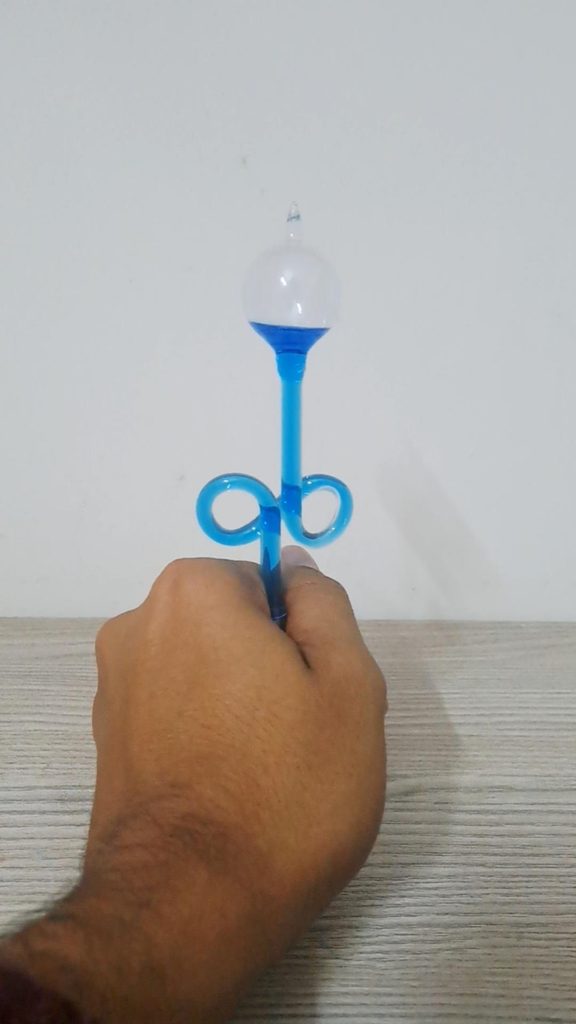
Step-2 Warming increases vapor pressure
Even before you touch the device, some liquid molecules have escaped into the space above the liquid. This process is called evaporation.
As the lower bulb warms, the liquid’s vapor pressure increases. Vapor pressure describes the pressure exerted by a substance’s vapor; its equilibrium value rises with temperature.
The upper bulb stays cooler, helping maintain a pressure difference between the two ends.
Step-3 The pressure difference pushes liquid upward
The greater pressure in the lower bulb pushes on the liquid’s surface, forcing liquid into the narrow tube and toward the upper bulb.
Think of the pressure difference as a push from below. It can lift liquid against gravity, sending the colored liquid around the loops and into the top chamber.
The liquid rises because of a pressure difference—not simply because of heat
Step-4 Vapor bubbles can follow
Once the liquid level in the lower bulb falls below the bottom opening of the internal tube, vapor can enter the tube and travel upward. As it bubbles through liquid in the upper bulb, the device can look as though it is boiling.
Is the Liquid Really Boiling?
The bubbling appearance needs a little explanation.
In a boiling kettle, vapor bubbles form within the heated liquid. In a typical upright hand boiler, bubbles arriving through the connecting tube can make the upper liquid appear to boil even though they originated below.
The liquid inside is also different from ordinary water, and the sealed device has its own internal pressure conditions. You should not interpret the bubbles as evidence that your hand has heated liquid to 100°C.
The clearest lesson is that a small temperature difference can produce enough pressure difference to move liquid.
What Happens When You Remove Your Hand?
After you release the lower bulb, it gradually cools. Its vapor pressure falls, and the pressure difference changes.
As the device returns toward room temperature, liquid can flow back into the lower bulb under gravity. The timing depends on the design and temperature conditions. Follow the manufacturer’s instructions if your model needs help resetting.
Try a Simple Hand Boiler Investigation
Use adult supervision and handle the glass gently.
- Start with the hand boiler upright and most of the liquid in the lower bulb.
- Gently cup the lower bulb while leaving the upper bulb exposed.
- Watch where the liquid moves first and how it travels through the loops.
- Notice whether bubbles appear after much of the liquid has risen.
- Release the bulb, place the device safely on a stable surface, and observe what happens as it cools.
Prediction question: Would warming both bulbs equally produce the same upward push?
The temperature difference matters. Warming both ends similarly reduces the difference in vapor pressure that drives the liquid upward hence upward motion of the liquid would be halted.
Why Might a Hand Boiler Respond Slowly?
If your hands are close to the device’s temperature, they transfer little heat to it. A hand boiler that has just been used may also need time to cool before another clear demonstration.
Try again after it has rested at room temperature. Keep the upper bulb free of your hand so it can remain cooler.
The response is influenced by starting temperature, contact area, and the device itself. It is an observation of heat transfer, rather than a precise way to compare people’s body temperatures.
Handle It Safely
Hand boilers are fragile glass instruments. Hold the lower bulb gently, avoid pressure on the narrow tube, and supervise children.
Use only hand warmth. Do not use a flame, stove, microwave, or hot water to speed up the demonstration. Never open the sealed device or taste its contents. If it breaks, keep children away and follow the manufacturer’s cleanup guidance.
What Can We Learn from a Hand Boiler?
A hand boiler turns an invisible pressure difference into visible motion. Heat from your hand changes conditions inside the lower bulb, and the resulting pressure difference lifts liquid through the tube.