
Interactive Tools
In this section of the site, learners get a chance to engage directly with scientific and mathematical concepts through hands-on, playful, and visual tools. Instead of passively reading about theory, users can experiment, explore, and visualize ideas in real time.
Triangle Calculator
The Triangle Calculator is an interactive learning widget that helps students easily solve and visualize triangles using basic geometry rules. By entering any three known values (with at least one side), students can instantly calculate the missing sides and angles, see a scaled triangle diagram, and understand the type of triangle formed. This Triangle Calculator … Read more
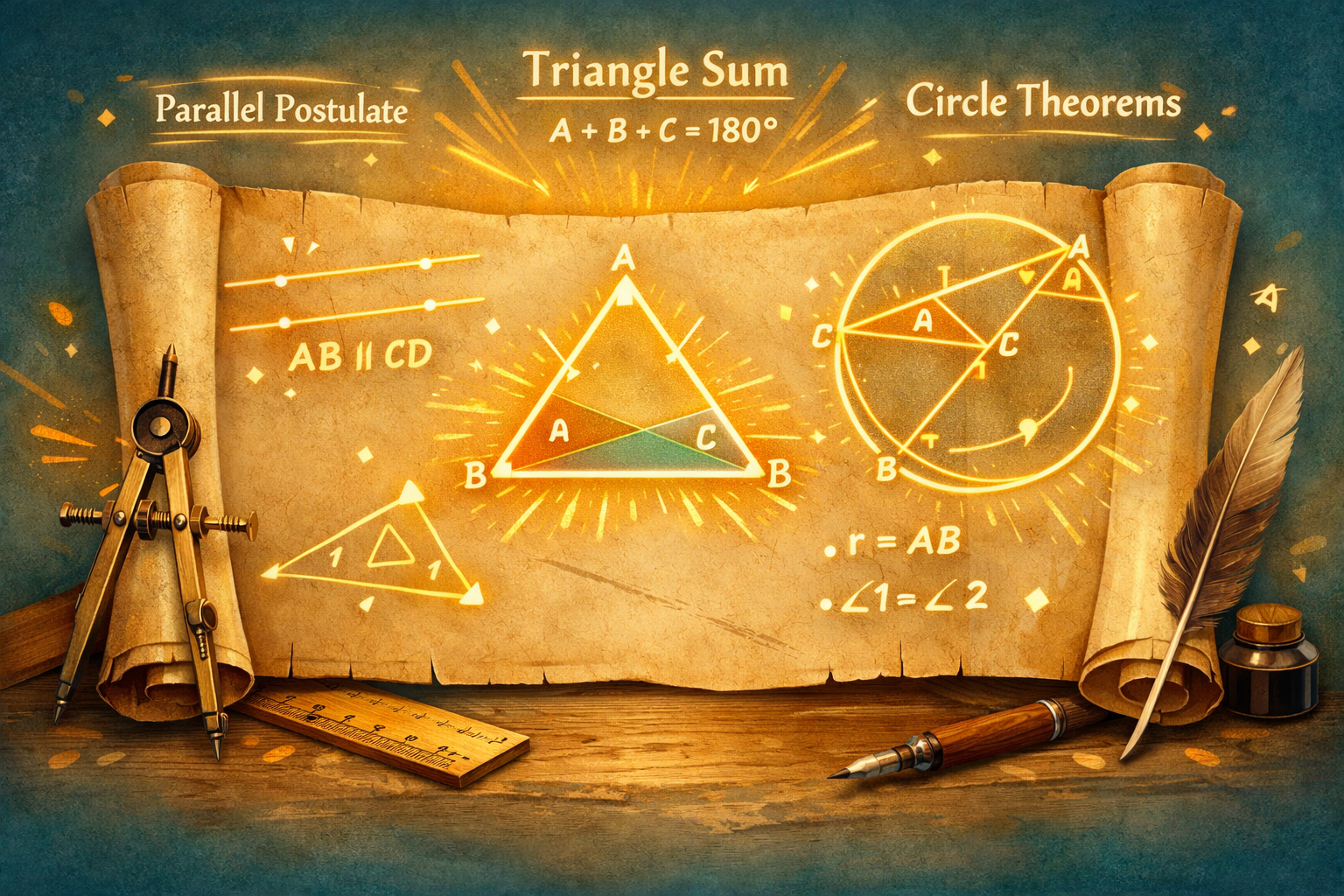
What Are Euclid Theorems? Explore Them with This Interactive Widget
This widget is licensed under the MIT License — see the LICENSE file for details.
How Many Ways Can You Arrange Books? A Fun Look at Factorial!
Have you ever wondered how many different ways a few books can be arranged on a shelf?This interactive widget helps you discover the idea of factorials by turning numbers into something you can see and play with.
Waves Superposition – Interactive Learning
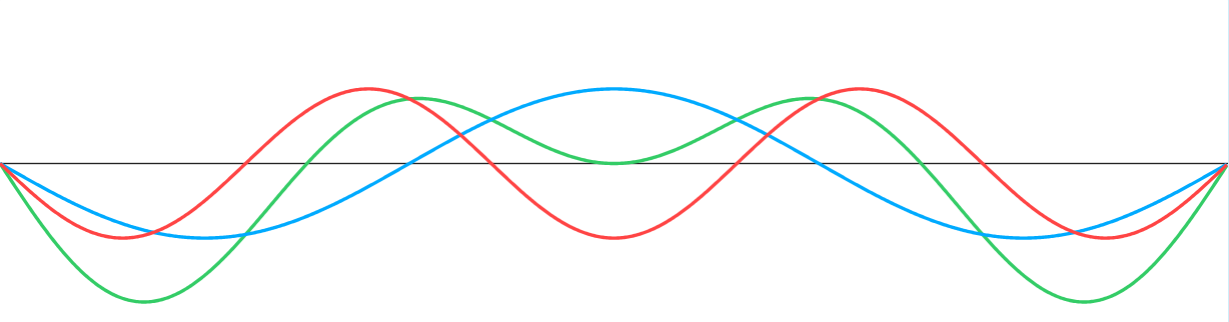
Sine Wave Superposition — A + B → Resultant 🎵 Waves Superposition Learning How it works? The **Principle of Superposition** states that when two or more waves travel through the same medium, the resultant value at any point is the vector sum of the individual waves at that point. In this widget, **Wave A (Blue)** … Read more
Exploring Permutations and Combinations: A Simple Visual Guide for Students
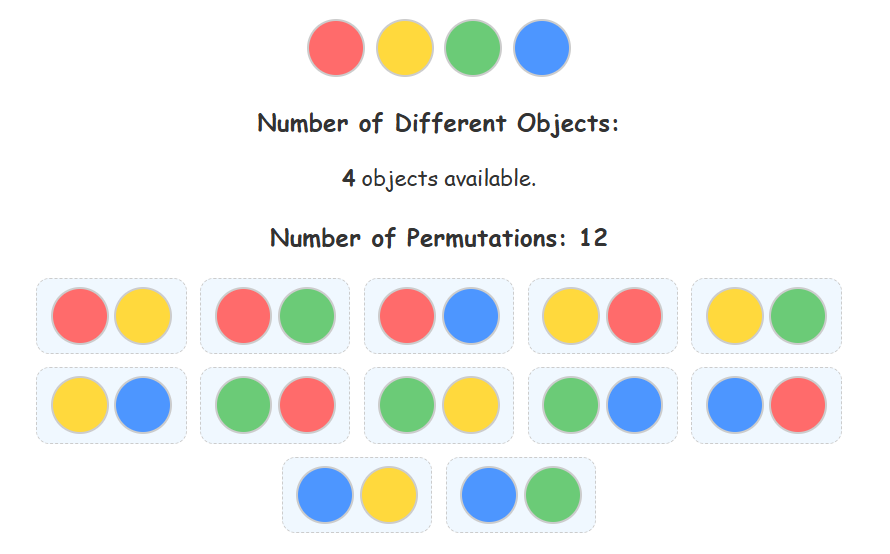
Permutations and combinations are two important ideas in mathematics that help us count the number of possible ways to arrange or select objects. Combination Combination is used when order does not matter.For example, choosing 2 ice-cream flavors from 5.Chocolate + Vanilla is the same as Vanilla + Chocolate, so it is counted only once. Formula … Read more
The Human Hearing Range Explorer
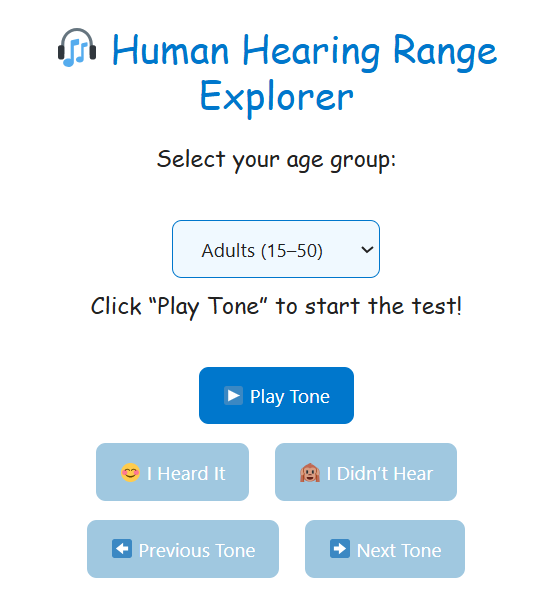
The Human Hearing Range Explorer is a fun and scientefically interactive tool that lets you test how much of this range you can actually hear. It plays tones of different frequencies, starting from very low rumbles to super-high pitches, and asks you to mark whether you can hear each one. Humans can hear sounds in … Read more
Calculate Mass, Volume or Density using this simple Calculator
Enter any two known parameters such as mass and volume, volume and density or mass and density to find the third unknown parameter Density Calculator Density (g/cm³): Mass (g): Volume (cm³): Calculate